

Bonner Springs, KS 66109
Managing Disciplinary Challenges in the Fire Service
This 2-day program is intended for chiefs and fire officers who may have to investigate misconduct by firefighters, as well as union representatives who may need to advise members during an internal investigation. HR professionals and attorneys who represent fire departments and firefighter unions will also benefit from the program. The course looks at the causes for disciplinary problems and explains proven methods for conducting a fair and impartial investigation. Learn how to organize and conduct an investigation, interview witnesses, preserve evidence, and find the truth while respecting the honorable service that firefighters provide. The course will also train union reps in how to recognize and challenge poorly done investigations, provide an introduction to the professional standards concept, and look at the strategic steps that fire service leaders need to consider when addressing disciplinary issues. Due process, Weingarten, and Garrity are covered along with the impact of civil service, collective bargaining and firefighter bill of rights laws. The program incorporates numerous case studies pulled from today’s headlines.
Instructor: Curt Varone, JD, EFO
Course Location:
George Meyn Center
631 N. 126th St.
Bonner Springs, KS 66109
Price: $375.00 per person.
To register offline, email curtvarone@gmail.com.
Course objectives: Attendees will be able to:
- Identify the role that fire service culture plays in misconduct
- Identify the ten major disciplinary problem areas
- Explain the purpose of discipline and the reasons it often becomes obscured
- Explain the role that bias plays in the discipline process, and the available tools to manage bias
- Distinguish between a bell-curve type disciplinary challenge and an outlier type disciplinary challenge
- Explain how fire service discipline of often binary, and the strategic steps to ensure a fairer process
- Define professional standards and explain the difference between the professional standards philosophy and traditional internal affairs
- Define at will, due process and explain the difference between procedural and substantive due process
- Identify the 7 essential components of procedural due process
- Distinguish between pre- and post-deprivation processes, and explain the role of a Loudermill (or Skelly) hearing in complying with due process
- Identify the six steps to an ideal professional standards system
- Identify the five steps in the investigation process
- Define the term complaint as it is used in professional standards
- Explain how to organize an investigation and identify the options for referring an investigation internally and externally
- Conduct an interview of witnesses, including the complainant, civilian witnesses, non-accused employees and accused employees
- Explain basic search and seizure principles that apply to administrative investigations
- Explain the need to seek expert assistance for evidence collection
- Explain the Weingarten rule, identify when it applies, and explain the best practices for investigators to respect it
- Explain Garrity immunity, identify when it applies, and explain the best practices that investigators need to follow
- Explain the importance of using formal admonishments when interviewing employees; identify the four types of admonishments; and distinguish when each type of admonishment should be used
- Explain the role of the investigation report and what the report should include
- Identify the term “firefighter bill of rights” law and identify the states that have such a law
- Distinguish between facts and conclusions
- Define and distinguish complaints, charges, adjudications, and appeals
- Explain the common burdens of proof, and the requirements for just cause
- Explain how to appeal-proof a written ruling on discipline
- Explain the role of a disciplinary matrix and an administrative insight
- Identify when last chance agreements are appropriate
- Explain the best practices for an early intervention program
- Given a factual scenario, be able to develop an investigation plan
Attendees will receive a comprehensive e-manual and course certificate from Fire Service Legal Training Institute, Inc.
Managing Disciplinary Challenges in the Fire Service
Outline
Day 1
1. Introduction 9:00-12:00 noon
- Introduction
- Fire and emergency service culture
- Discipline problem: the data and case studies
Professional standards philosophy 1:00 to 2:30pm
- Introduction to professional standards
- 6 steps to implement the ideal professional standards system
- Exercise: Shifting the Bell-Curve
2. Due Process 2:30 to 4:00pm
- Introduction to due process
- Due process: procedural and substantive
- 3 big questions: whether, how much, when
- 7 Essential components of procedural due process
- Substantive due process
3. Process of handling a complaint 4:00 to 5:00pm
- 5 steps in the investigation process
- Complaints and sources of complaints
- Acceptance of complaints
- Preliminary Investigation
- Special reports
Day 2
4. Organizing the Investigation Process 9:00 to 10:00am
- Investigative responsibility
- Internal & external referrals
- Initiation of the investigation
- Responsibility and tracking
- Notice to complainant and accused
- Investigation due dates and extensions
- Developing the investigation plan
5. Evidence 10:00 to 10:30am
- Evidence and evidence handling
- Spoliation
- Fourth Amendment concerns
- Case file
6. Interviewing Witnesses 10:30am to 12:00pm
- Identifying potential witness
- Planning the interview process
- Research each witness to be interviewed
- Order of the interviews
- Scheduling interviews
- Representation during interviews
- Lawyers
- Weingarten
- General interview techniques
- Recording
- Documentation
- Admonishments
- Narrative Based interview
- Code of silence
7. Interviewing the Accused 1:00pm to 2:30 pm
- Introduction to Garrity
- Compelled
- Assured
- Notice to the Accused
- Admonishments
- Interviewing The Accused Employee
- Strategic considerations
8. Drafting the final report 2:30pm to 3:00pm
- Organizing the report
- Objectivity and exculpatory evidence
- Additional Thoughts on the Report
9. Adjudication 3:00 pm to 4:00pm
- Introduction to adjudication
- Role of Investigators in the Adjudication Process
- Burden of Proof
- Just Cause
- Disciplinary systems
- Written decisions
- Corrective Actions
- Determining the Appropriate Corrective Action
- Disciplinary Matrix
- Administrative Insight
10. Early Identification Programs: 4:00pm to 5:00pm
- Introduction
- Criteria for Early Identification
- Program Responsibility
- Reporting Formats
- Supervisory Responsibility
- Use of the Early Identification Information
- Summary
INSTRUCTOR
Curt Varone has over 40 years of experience in the fire service. He served twenty-nine years with the Providence, Rhode Island, Fire Department, retiring as a Deputy Assistant Chief (shift-commander). He has been a practicing attorney for thirty years licensed in both Rhode Island and Maine. He previously served as the Director of the Public Fire Protection Division at the National Fire Protection Association. Curt has written two books, Legal Considerations for Fire and Emergency Services, and Fire Officer's Legal Handbook. He is a contributing editor for Firehouse Magazine writing the Fire Law column and remains active as a deputy chief with the Exeter (RI) Fire Department.
Price: $375.00
To register offline, email curtvarone@gmail.com.
HOTELS
Residence Inn - Village West
1875 Village West Pkwy
Kansas City, KS 66111
913 788-5650
Negotiated rate: $144/night (use the link below to register)
Holiday Inn Express Kansas City - Bonner Springs
13031 Ridge Dr.
Bonner Springs, KS 66012
913 721-5300
Comfort Inn Bonner Springs Kansas City
13041 Ridge Dr.
Bonner Springs, KS 66012
913 382-3807
AIRPORT INFORMATION
The closest airport to the training site is Kansas City International Airport (MCI) is 30 miles - 30 min. away.
For additional information please contact:
Curt Varone: curtvarone@gmail.com
Cancellation and Refund Policy
We all know that sometimes plans must change. If you find you can no longer attend a program, please contact me at curtvarone@gmail.com. Among the options are:
- transferring your registration to a colleague
- setting up a credit for a future program
- providing a full or partial refund
If you are seeking a refund, provided you notify me at least 30 days prior to a scheduled event, a full refund will be provided. If notice is provided less than 30 days prior to the event, you will receive a refund of 50%, unless notice is provided less than 10 days prior to an event, in which case a refund will not be provided. However, in the event that a class is sold out and your seat has been re-filled, a full refund will be provided.
Remember - if you cannot attend you can always transfer your registration to a colleague or set up a credit for a future class. Just notify me before hand. No show = no refund or credit.
Please note that any training program may be cancelled due to insufficient enrollment at least 20 calendar days in advance of the scheduled course date. In the event of a cancellation, notice will be provided with the option to reschedule for a future course date or to receive a full refund of registration fees. I am not responsible for any expenses incurred by the registrant if a training course is cancelled. If you are considering booking non-refundable flights feel free to email me at curtvarone@gmail.com to confirm that enrollment is sufficient.
If a training class is cancelled due to any unforeseen circumstances such as weather or natural disaster, the customer is entitled to reschedule for a future training course.
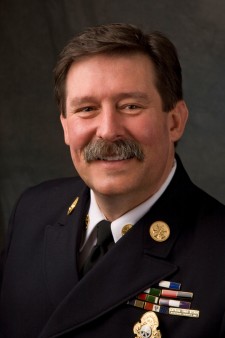
Curt Varone has over 50 years of experience in the fire service. He served twenty-nine years with the Providence, Rhode Island, Fire Department, retiring as a Deputy Assistant Chief (shift-commander). He has been a practicing attorney for over forty years, licensed in both Rhode Island and Maine. Besides his Juris Doctorate, he has a Master's in Forensic Psychology. He previously served as the Director of the Public Fire Protection Division at the National Fire Protection Association. Curt has written four books, Legal Considerations for Fire and Emergency Services, Fire Officer's Legal Handbook, Managing Disciplinary Challenges in the Fire Service, and The Judgment Line. He is a contributing editor for Firehouse Magazine writing the Fire Law column and remains active as a deputy chief with the Exeter (RI) Fire Department.
Managing Disciplinary Challenges in the Fire Service
This 2-day program is intended for chiefs and fire officers who may have to investigate misconduct by firefighters, as well as union representatives who may need to advise members during an internal investigation. HR professionals and attorneys who represent fire departments and firefighter unions will also benefit from the program. The course looks at the causes for disciplinary problems and explains proven methods for conducting a fair and impartial investigation. Learn how to organize and conduct an investigation, interview witnesses, preserve evidence, and find the truth while respecting the honorable service that firefighters provide. The course will also train union reps in how to recognize and challenge poorly done investigations, provide an introduction to the professional standards concept, and look at the strategic steps that fire service leaders need to consider when addressing disciplinary issues. Due process, Weingarten, and Garrity are covered along with the impact of civil service, collective bargaining and firefighter bill of rights laws. The program incorporates numerous case studies pulled from today’s headlines.
Instructor: Curt Varone, JD, EFO
Course Location:
George Meyn Center
631 N. 126th St.
Bonner Springs, KS 66109
Price: $375.00 per person.
To register offline, email curtvarone@gmail.com.
Course objectives: Attendees will be able to:
- Identify the role that fire service culture plays in misconduct
- Identify the ten major disciplinary problem areas
- Explain the purpose of discipline and the reasons it often becomes obscured
- Explain the role that bias plays in the discipline process, and the available tools to manage bias
- Distinguish between a bell-curve type disciplinary challenge and an outlier type disciplinary challenge
- Explain how fire service discipline of often binary, and the strategic steps to ensure a fairer process
- Define professional standards and explain the difference between the professional standards philosophy and traditional internal affairs
- Define at will, due process and explain the difference between procedural and substantive due process
- Identify the 7 essential components of procedural due process
- Distinguish between pre- and post-deprivation processes, and explain the role of a Loudermill (or Skelly) hearing in complying with due process
- Identify the six steps to an ideal professional standards system
- Identify the five steps in the investigation process
- Define the term complaint as it is used in professional standards
- Explain how to organize an investigation and identify the options for referring an investigation internally and externally
- Conduct an interview of witnesses, including the complainant, civilian witnesses, non-accused employees and accused employees
- Explain basic search and seizure principles that apply to administrative investigations
- Explain the need to seek expert assistance for evidence collection
- Explain the Weingarten rule, identify when it applies, and explain the best practices for investigators to respect it
- Explain Garrity immunity, identify when it applies, and explain the best practices that investigators need to follow
- Explain the importance of using formal admonishments when interviewing employees; identify the four types of admonishments; and distinguish when each type of admonishment should be used
- Explain the role of the investigation report and what the report should include
- Identify the term “firefighter bill of rights” law and identify the states that have such a law
- Distinguish between facts and conclusions
- Define and distinguish complaints, charges, adjudications, and appeals
- Explain the common burdens of proof, and the requirements for just cause
- Explain how to appeal-proof a written ruling on discipline
- Explain the role of a disciplinary matrix and an administrative insight
- Identify when last chance agreements are appropriate
- Explain the best practices for an early intervention program
- Given a factual scenario, be able to develop an investigation plan
Attendees will receive a comprehensive e-manual and course certificate from Fire Service Legal Training Institute, Inc.
Managing Disciplinary Challenges in the Fire Service
Outline
Day 1
1. Introduction 9:00-12:00 noon
- Introduction
- Fire and emergency service culture
- Discipline problem: the data and case studies
Professional standards philosophy 1:00 to 2:30pm
- Introduction to professional standards
- 6 steps to implement the ideal professional standards system
- Exercise: Shifting the Bell-Curve
2. Due Process 2:30 to 4:00pm
- Introduction to due process
- Due process: procedural and substantive
- 3 big questions: whether, how much, when
- 7 Essential components of procedural due process
- Substantive due process
3. Process of handling a complaint 4:00 to 5:00pm
- 5 steps in the investigation process
- Complaints and sources of complaints
- Acceptance of complaints
- Preliminary Investigation
- Special reports
Day 2
4. Organizing the Investigation Process 9:00 to 10:00am
- Investigative responsibility
- Internal & external referrals
- Initiation of the investigation
- Responsibility and tracking
- Notice to complainant and accused
- Investigation due dates and extensions
- Developing the investigation plan
5. Evidence 10:00 to 10:30am
- Evidence and evidence handling
- Spoliation
- Fourth Amendment concerns
- Case file
6. Interviewing Witnesses 10:30am to 12:00pm
- Identifying potential witness
- Planning the interview process
- Research each witness to be interviewed
- Order of the interviews
- Scheduling interviews
- Representation during interviews
- Lawyers
- Weingarten
- General interview techniques
- Recording
- Documentation
- Admonishments
- Narrative Based interview
- Code of silence
7. Interviewing the Accused 1:00pm to 2:30 pm
- Introduction to Garrity
- Compelled
- Assured
- Notice to the Accused
- Admonishments
- Interviewing The Accused Employee
- Strategic considerations
8. Drafting the final report 2:30pm to 3:00pm
- Organizing the report
- Objectivity and exculpatory evidence
- Additional Thoughts on the Report
9. Adjudication 3:00 pm to 4:00pm
- Introduction to adjudication
- Role of Investigators in the Adjudication Process
- Burden of Proof
- Just Cause
- Disciplinary systems
- Written decisions
- Corrective Actions
- Determining the Appropriate Corrective Action
- Disciplinary Matrix
- Administrative Insight
10. Early Identification Programs: 4:00pm to 5:00pm
- Introduction
- Criteria for Early Identification
- Program Responsibility
- Reporting Formats
- Supervisory Responsibility
- Use of the Early Identification Information
- Summary
INSTRUCTOR
Curt Varone has over 40 years of experience in the fire service. He served twenty-nine years with the Providence, Rhode Island, Fire Department, retiring as a Deputy Assistant Chief (shift-commander). He has been a practicing attorney for thirty years licensed in both Rhode Island and Maine. He previously served as the Director of the Public Fire Protection Division at the National Fire Protection Association. Curt has written two books, Legal Considerations for Fire and Emergency Services, and Fire Officer's Legal Handbook. He is a contributing editor for Firehouse Magazine writing the Fire Law column and remains active as a deputy chief with the Exeter (RI) Fire Department.
Price: $375.00
To register offline, email curtvarone@gmail.com.
HOTELS
Residence Inn - Village West
1875 Village West Pkwy
Kansas City, KS 66111
913 788-5650
Negotiated rate: $144/night (use the link below to register)
Holiday Inn Express Kansas City - Bonner Springs
13031 Ridge Dr.
Bonner Springs, KS 66012
913 721-5300
Comfort Inn Bonner Springs Kansas City
13041 Ridge Dr.
Bonner Springs, KS 66012
913 382-3807
AIRPORT INFORMATION
The closest airport to the training site is Kansas City International Airport (MCI) is 30 miles - 30 min. away.
For additional information please contact:
Curt Varone: curtvarone@gmail.com
Cancellation and Refund Policy
We all know that sometimes plans must change. If you find you can no longer attend a program, please contact me at curtvarone@gmail.com. Among the options are:
- transferring your registration to a colleague
- setting up a credit for a future program
- providing a full or partial refund
If you are seeking a refund, provided you notify me at least 30 days prior to a scheduled event, a full refund will be provided. If notice is provided less than 30 days prior to the event, you will receive a refund of 50%, unless notice is provided less than 10 days prior to an event, in which case a refund will not be provided. However, in the event that a class is sold out and your seat has been re-filled, a full refund will be provided.
Remember - if you cannot attend you can always transfer your registration to a colleague or set up a credit for a future class. Just notify me before hand. No show = no refund or credit.
Please note that any training program may be cancelled due to insufficient enrollment at least 20 calendar days in advance of the scheduled course date. In the event of a cancellation, notice will be provided with the option to reschedule for a future course date or to receive a full refund of registration fees. I am not responsible for any expenses incurred by the registrant if a training course is cancelled. If you are considering booking non-refundable flights feel free to email me at curtvarone@gmail.com to confirm that enrollment is sufficient.
If a training class is cancelled due to any unforeseen circumstances such as weather or natural disaster, the customer is entitled to reschedule for a future training course.