

Park City, UT 84098
Advanced Disciplinary Challenges in the Fire Service
This 2-day program is a deep study into the causes of, and solutions for, discipline - related problems in the fire service. Managing difficult employees, credibility determinations, and advanced interviewing are just a few of the in-depth topics covered. The program is geared toward fire officers, HR professionals with responsibility for fire departments, attorneys, and experienced union representatives who routinely advise members during an internal investigation. The course builds upon Managing Disciplinary Challenges in the Fire Service, going deeper into interviewing; identifying and managing deception; evidence collection and handling; due process; Weingarten; Garrity and a firefighter’s right to remain silent are thoroughly covered along with the impact of civil service, collective bargaining, and firefighter bill of rights laws.
Instructor: Curt Varone, JD, EFO
Host: Park City Fire Department
Course Location:
736 West Bitner Road
Park City, UT 84098
Price: $375.00 per person. - REGISTER AT THE DOOR - SEATS STILL AVAILABLE
To register offline, email curtvarone@gmail.com.
INSTRUCTOR
Curt Varone has over 45 years of experience in the fire service. He served twenty-nine years with the Providence, Rhode Island, Fire Department, retiring as a Deputy Assistant Chief (shift-commander). He has been a practicing attorney for thirty-five years licensed in both Rhode Island and Maine. He previously served as the Director of the Public Fire Protection Division at the National Fire Protection Association. Curt has written two books, Legal Considerations for Fire and Emergency Services, and Fire Officer's Legal Handbook. He is a contributing editor for Firehouse Magazine writing the Fire Law column and remains active as a deputy chief with the Exeter (RI) Fire Department.
Course objectives: Attendees will be able to:
- Identify the problems that commonly arise during administrative disciplinary investigations, and how professional standards addresses those problem areas
- Distinguish between procedural and substantive due process
- Identify the 7 essential components of procedural due process
- Distinguish between pre- and post-deprivation processes, and explain the role of a Loudermill (Skelly) hearing in complying with due process
- Identify the six steps to an ideal professional standards system
- Identify the five steps in the investigation process
- Explain how to organize an investigation and identify the options for referring an investigation internally and externally
- Conduct an interview of witnesses, including the complainant, civilian witnesses, non-accused employees and accused employees
- Explain how to document and seize evidence, when to seek expert assistance, how to avoid spoliation claims, how to comply with chain of custody requirements, the importance of a scene diagram, and best practices for investigative photography
- Explain the search and seizure principles that apply to administrative investigations
- Explain when employee drug testing is allowed under the Fourth Amendment, and identify best practices for avoiding challenges to drug tests
- Explain how to conduct a photo or live lineup, the legal challenges that often arise from lineups, and the importance conducting lineups in a way that meets the applicable standard of care
- Explain the Weingarten rule, identify when it applies, and explain the best practices for investigators to respect it
- Explain Garrity immunity, identify when it applies, and explain the best practices that investigators need to follow
- Distinguish between a Garrity problem and a Gardner problem
- Identify the states that take a minority view of Garrity, and the solutions necessary in those jurisdictions
- Explain the importance of using formal admonishments when interviewing employees; identify the four types of admonishments; distinguish when each type of admonishment should be used; and explain the strategic differences in an interview depending on which admonishment is used
- Define the “Code of Silence” and explain how best to handle it when it arises
- Define the term credibility determination (credibility assessment)
- Identify where a credibility determination should be made, and when doing so would be inappropriate
- Explain how to conduct a credibility determination, including the factors to be considered
- Identify the empirically established indicators of deception, and explain their use in the context of a credibility determination
- Define bias, implicit bias, confirmation bias and the fundamental attribution error, and explain how each poses a challenge to the professional standards process
- Identify the six personality types that are commonly associated with difficult and/or toxic employees, and the challenges each creates in the workplace
- Explain the recommended process for managing the disciplinary concerns associated with difficult and/or toxic employees
Attendees will receive a comprehensive e-manual and course certificate from Fire Service Legal Training Institute, Inc.
Advanced Disciplinary Challenges in the Fire Service
Outline
Day 1
Intro to Advanced Concepts – 9:00am to 10:30am
- The problem
- Professional standards
- Due process
- Disciplinary time lines
- Outliers and bell curve problems
Evidence Use and Control 10:30am to 12:00pm and 1:00pm to 2:00pm
- Introduction
- Chain of custody
- Still Photographic Evidence
- Use of Video
- Medical evidence
- Scene Diagram
- Communications records
- Searches and the 4th Amendment
- Use of polygraph or voice stress detection
- Chemical testing, photo & physical lineups
Advanced Interviewing 2:00pm to 5:00pm
- Identifying potential witness
- Planning the interview process
- Research each witness to be interviewed
- Order of the interviews
- Scheduling interviews
- Representation during interviews
- General interview techniques
- Complainant interviews
- Interviews with non-accused employees
- Handling interview problems
Day 2
Advanced Garrity - 9:00am to 11:00am
- Overview of Garrity
- Overview of Gardner
- Strategic considerations
- Sealing the Record
- Garrity exceptions: perjury & obstruction
- Garrity & duty to report
Credibility determinations 11:00-12:00pm and 1:00pm to 2:00pm
- Overview of credibility determinations
- Where credibility determinations need to be made
- How to make a credibility determination
- Factors to evaluate
- Common Pitfalls
Toxic employees & HR issues 2:00-5:00 pm
- Identifying toxic employees
- Fire service challenges with toxic employees
- Toxic behaviors
- Legal challenges with toxic employees
- FMLA
- ADA
- Title VII
- Hostile Work Environment
- Common mistakes FDs make
- Solutions
Price: $375.00 per person.
To register offline, email curtvarone@gmail.com.
HOTELS
Newpark Hotel
1476 Newpark Boulevard
Park City, Utah 84098
877-649-3600
***
Holiday Inn Express
1501 West Ute Boulevard
Park City, Utah 84098
435-658-1600
AIRPORT INFORMATION
The closest airport to the training site is Salt Lake International Airport (SLC), aproximately 25 miles away.
For additional information please contact:
Curt Varone: curtvarone@gmail.com
Cancellation and Refund Policy
We all know that sometimes plans must change. If you find you can no longer attend a program, please contact me at curtvarone@gmail.com. Among the options are:
- transferring your registration to a colleague
- setting up a credit for a future program
- providing a full or partial refund
If you are seeking a refund, provided you notify me at least 30 days prior to a scheduled event, a full refund will be provided. If notice is provided less than 30 days prior to the event, you will receive a refund of 50%, unless notice is provided less than 10 days prior to an event, in which case a refund will not be provided. However, in the event that a class is sold out and your seat has been re-filled, a full refund will be provided.
Remember - if you cannot attend you can always transfer your registration to a colleague or set up a credit for a future class. Just notify me before hand. No show = no refund or credit.
Please note that any training program may be cancelled due to insufficient enrollment at least 20 calendar days in advance of the scheduled course date. In the event of a cancellation, notice will be provided with the option to reschedule for a future course date or to receive a full refund of registration fees. I am not responsible for any expenses incurred by the registrant if a training course is cancelled. If you are considering booking non-refundable flights feel free to email me at curtvarone@gmail.com to confirm that enrollment is sufficient.
If a training class is cancelled due to any unforeseen circumstances such as weather or natural disaster, the customer is entitled to reschedule for a future training course.
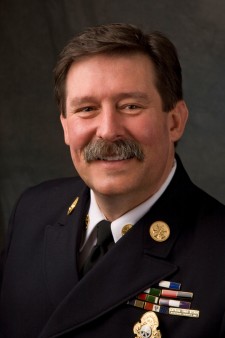
Curt Varone has over 50 years of experience in the fire service. He served twenty-nine years with the Providence, Rhode Island, Fire Department, retiring as a Deputy Assistant Chief (shift-commander). He has been a practicing attorney for over forty years, licensed in both Rhode Island and Maine. Besides his Juris Doctorate, he has a Master's in Forensic Psychology. He previously served as the Director of the Public Fire Protection Division at the National Fire Protection Association. Curt has written four books, Legal Considerations for Fire and Emergency Services, Fire Officer's Legal Handbook, Managing Disciplinary Challenges in the Fire Service, and The Judgment Line. He is a contributing editor for Firehouse Magazine writing the Fire Law column and remains active as a deputy chief with the Exeter (RI) Fire Department.
Advanced Disciplinary Challenges in the Fire Service
This 2-day program is a deep study into the causes of, and solutions for, discipline - related problems in the fire service. Managing difficult employees, credibility determinations, and advanced interviewing are just a few of the in-depth topics covered. The program is geared toward fire officers, HR professionals with responsibility for fire departments, attorneys, and experienced union representatives who routinely advise members during an internal investigation. The course builds upon Managing Disciplinary Challenges in the Fire Service, going deeper into interviewing; identifying and managing deception; evidence collection and handling; due process; Weingarten; Garrity and a firefighter’s right to remain silent are thoroughly covered along with the impact of civil service, collective bargaining, and firefighter bill of rights laws.
Instructor: Curt Varone, JD, EFO
Host: Park City Fire Department
Course Location:
736 West Bitner Road
Park City, UT 84098
Price: $375.00 per person. - REGISTER AT THE DOOR - SEATS STILL AVAILABLE
To register offline, email curtvarone@gmail.com.
INSTRUCTOR
Curt Varone has over 45 years of experience in the fire service. He served twenty-nine years with the Providence, Rhode Island, Fire Department, retiring as a Deputy Assistant Chief (shift-commander). He has been a practicing attorney for thirty-five years licensed in both Rhode Island and Maine. He previously served as the Director of the Public Fire Protection Division at the National Fire Protection Association. Curt has written two books, Legal Considerations for Fire and Emergency Services, and Fire Officer's Legal Handbook. He is a contributing editor for Firehouse Magazine writing the Fire Law column and remains active as a deputy chief with the Exeter (RI) Fire Department.
Course objectives: Attendees will be able to:
- Identify the problems that commonly arise during administrative disciplinary investigations, and how professional standards addresses those problem areas
- Distinguish between procedural and substantive due process
- Identify the 7 essential components of procedural due process
- Distinguish between pre- and post-deprivation processes, and explain the role of a Loudermill (Skelly) hearing in complying with due process
- Identify the six steps to an ideal professional standards system
- Identify the five steps in the investigation process
- Explain how to organize an investigation and identify the options for referring an investigation internally and externally
- Conduct an interview of witnesses, including the complainant, civilian witnesses, non-accused employees and accused employees
- Explain how to document and seize evidence, when to seek expert assistance, how to avoid spoliation claims, how to comply with chain of custody requirements, the importance of a scene diagram, and best practices for investigative photography
- Explain the search and seizure principles that apply to administrative investigations
- Explain when employee drug testing is allowed under the Fourth Amendment, and identify best practices for avoiding challenges to drug tests
- Explain how to conduct a photo or live lineup, the legal challenges that often arise from lineups, and the importance conducting lineups in a way that meets the applicable standard of care
- Explain the Weingarten rule, identify when it applies, and explain the best practices for investigators to respect it
- Explain Garrity immunity, identify when it applies, and explain the best practices that investigators need to follow
- Distinguish between a Garrity problem and a Gardner problem
- Identify the states that take a minority view of Garrity, and the solutions necessary in those jurisdictions
- Explain the importance of using formal admonishments when interviewing employees; identify the four types of admonishments; distinguish when each type of admonishment should be used; and explain the strategic differences in an interview depending on which admonishment is used
- Define the “Code of Silence” and explain how best to handle it when it arises
- Define the term credibility determination (credibility assessment)
- Identify where a credibility determination should be made, and when doing so would be inappropriate
- Explain how to conduct a credibility determination, including the factors to be considered
- Identify the empirically established indicators of deception, and explain their use in the context of a credibility determination
- Define bias, implicit bias, confirmation bias and the fundamental attribution error, and explain how each poses a challenge to the professional standards process
- Identify the six personality types that are commonly associated with difficult and/or toxic employees, and the challenges each creates in the workplace
- Explain the recommended process for managing the disciplinary concerns associated with difficult and/or toxic employees
Attendees will receive a comprehensive e-manual and course certificate from Fire Service Legal Training Institute, Inc.
Advanced Disciplinary Challenges in the Fire Service
Outline
Day 1
Intro to Advanced Concepts – 9:00am to 10:30am
- The problem
- Professional standards
- Due process
- Disciplinary time lines
- Outliers and bell curve problems
Evidence Use and Control 10:30am to 12:00pm and 1:00pm to 2:00pm
- Introduction
- Chain of custody
- Still Photographic Evidence
- Use of Video
- Medical evidence
- Scene Diagram
- Communications records
- Searches and the 4th Amendment
- Use of polygraph or voice stress detection
- Chemical testing, photo & physical lineups
Advanced Interviewing 2:00pm to 5:00pm
- Identifying potential witness
- Planning the interview process
- Research each witness to be interviewed
- Order of the interviews
- Scheduling interviews
- Representation during interviews
- General interview techniques
- Complainant interviews
- Interviews with non-accused employees
- Handling interview problems
Day 2
Advanced Garrity - 9:00am to 11:00am
- Overview of Garrity
- Overview of Gardner
- Strategic considerations
- Sealing the Record
- Garrity exceptions: perjury & obstruction
- Garrity & duty to report
Credibility determinations 11:00-12:00pm and 1:00pm to 2:00pm
- Overview of credibility determinations
- Where credibility determinations need to be made
- How to make a credibility determination
- Factors to evaluate
- Common Pitfalls
Toxic employees & HR issues 2:00-5:00 pm
- Identifying toxic employees
- Fire service challenges with toxic employees
- Toxic behaviors
- Legal challenges with toxic employees
- FMLA
- ADA
- Title VII
- Hostile Work Environment
- Common mistakes FDs make
- Solutions
Price: $375.00 per person.
To register offline, email curtvarone@gmail.com.
HOTELS
Newpark Hotel
1476 Newpark Boulevard
Park City, Utah 84098
877-649-3600
***
Holiday Inn Express
1501 West Ute Boulevard
Park City, Utah 84098
435-658-1600
AIRPORT INFORMATION
The closest airport to the training site is Salt Lake International Airport (SLC), aproximately 25 miles away.
For additional information please contact:
Curt Varone: curtvarone@gmail.com
Cancellation and Refund Policy
We all know that sometimes plans must change. If you find you can no longer attend a program, please contact me at curtvarone@gmail.com. Among the options are:
- transferring your registration to a colleague
- setting up a credit for a future program
- providing a full or partial refund
If you are seeking a refund, provided you notify me at least 30 days prior to a scheduled event, a full refund will be provided. If notice is provided less than 30 days prior to the event, you will receive a refund of 50%, unless notice is provided less than 10 days prior to an event, in which case a refund will not be provided. However, in the event that a class is sold out and your seat has been re-filled, a full refund will be provided.
Remember - if you cannot attend you can always transfer your registration to a colleague or set up a credit for a future class. Just notify me before hand. No show = no refund or credit.
Please note that any training program may be cancelled due to insufficient enrollment at least 20 calendar days in advance of the scheduled course date. In the event of a cancellation, notice will be provided with the option to reschedule for a future course date or to receive a full refund of registration fees. I am not responsible for any expenses incurred by the registrant if a training course is cancelled. If you are considering booking non-refundable flights feel free to email me at curtvarone@gmail.com to confirm that enrollment is sufficient.
If a training class is cancelled due to any unforeseen circumstances such as weather or natural disaster, the customer is entitled to reschedule for a future training course.